
If you’re sorting this out near South Perth Dental Surgery in South Perth, this guide walks through what usually happens and what only a check-up can decide.
If you’re considering a full set of implant-supported teeth, you may be worried about the surgery, the cost, or simply whether the treatment would work in your situation. Those are sensible concerns, and they can’t be settled by an online checklist alone.
All-on-4 is one way of supporting a full arch of replacement teeth. It can suit some people who have lost most or all of their teeth, but the decision depends on your mouth, general health, expectations and willingness to maintain the result. An examination is where those pieces come together.
This article explains what usually happens, what can vary and what you should ask during a consultation in South Perth.
If you are weighing full-arch implants
People tend to ask about full-arch implants when loose or failing teeth make eating difficult, when a removable appliance no longer feels workable, or when several teeth may need treatment at once. You might also be trying to compare a fixed bridge with conventional dentures.
Start with the problem you want addressed, not a treatment name. Are your teeth painful? Does an existing denture move? Are you struggling to clean around damaged teeth? Your answer helps the dentist work out which options deserve a closer look.
Dental implants are placed into the jaw during surgery and can support crowns, bridges or some types of denture. Healthdirect notes that implant treatment involves surgery and carries risks such as infection, injury to nearby structures and failure of the implant to join with the bone. Its Healthdirect guidance on dental implants gives a useful overview for Australian patients.
An online description can’t show whether you have active gum disease, enough suitable bone, an infection or a bite that may overload the planned bridge. It also can’t assess how a health condition or medicine might affect healing. That’s why an individual examination matters.
For local patients from South Perth, Como and nearby parts of Perth, the practical first step is to bring your questions, medicine list and any concerns about previous dental care. You don’t need to arrive already committed to surgery.
What All-on-4 means in plain language
The basic idea is straightforward: four dental implants are positioned in a jaw to support a full-arch bridge. The bridge is fixed to the implants rather than resting loosely on the gums. “Four” describes the usual implant arrangement associated with the concept; it doesn’t mean four implants will suit every jaw.
The implants act as supports, while the bridge replaces the visible teeth across that arch. Implant position, bone condition, bite forces and the design of the replacement teeth all influence the plan. Your dentist may also need to discuss whether existing teeth can remain or need treatment.
Some treatment plans include a provisional bridge during healing. Others require a different sequence. You should ask what you would wear at each stage, because the answer depends on stability at placement, the condition of the tissues and the clinician’s assessment. Don’t assume that every person leaves surgery with the same type of teeth.
You can read more about All-on-4 and other forms of dental implants, but an information page can’t choose between them for you.
All-on-4 may not suit you if uncontrolled oral disease, certain health concerns, smoking, limited bone, cleaning difficulties or unrealistic expectations make the risks unacceptable. Those factors don’t all lead to the same decision. They need to be considered together.
The assessment and planning steps
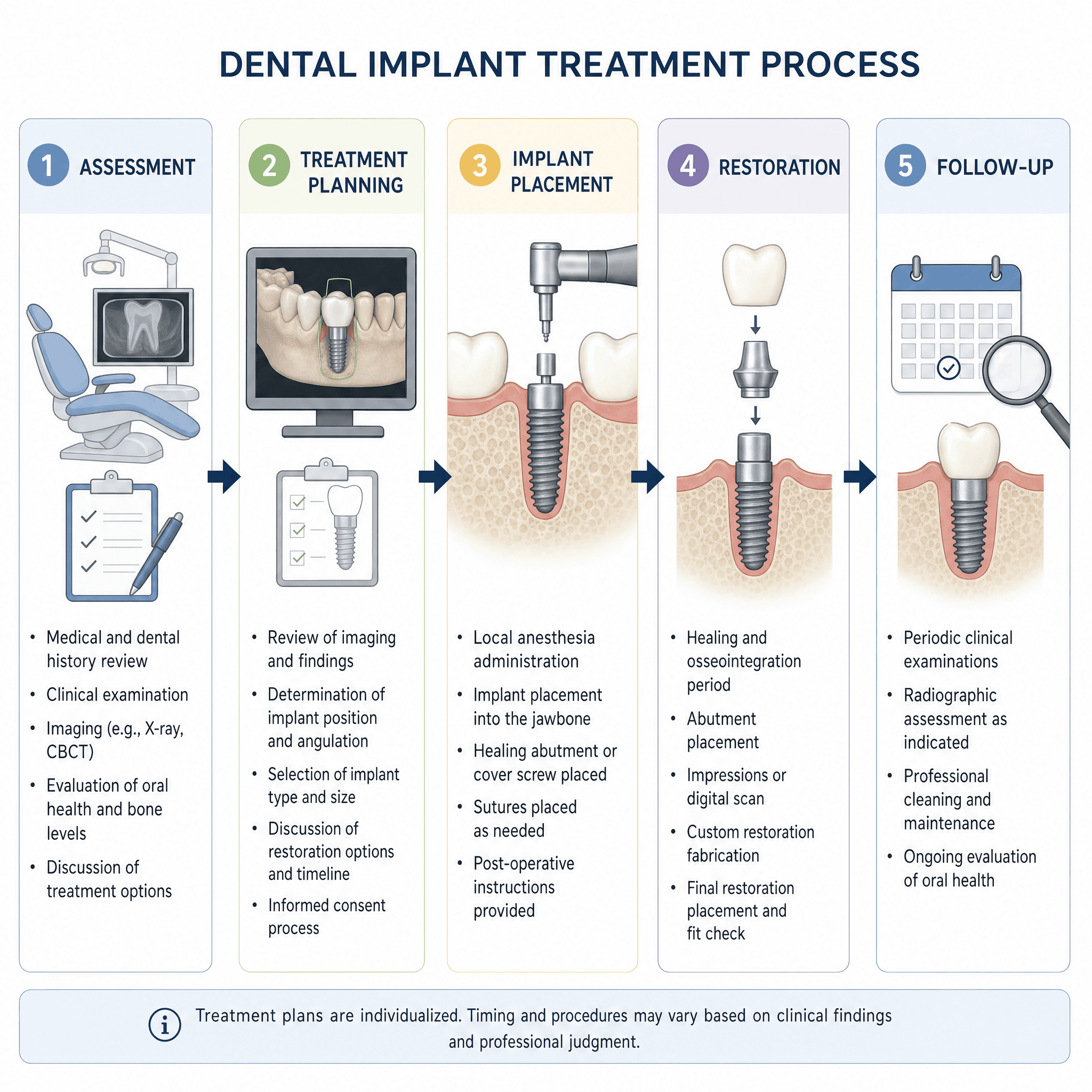
Treatment planning starts with a conversation and an examination, not the operation. Expect questions about what bothers you, what you hope to eat, how you manage cleaning, your previous dental experiences and your medical history. Mention prescription medicines, over-the-counter products and supplements rather than assuming one is irrelevant.
Process overview
| Stage | What usually happens | Your job |
|---|---|---|
| Assessment | Exam, imaging, medical history | Share full health and medicine list |
| Plan | Suitability and staged options | Ask what can wait and what cannot |
| Review | Healing checks and long-term care | Keep cleaning and review visits |
Looking at your teeth, gums and bite
The dentist will usually examine your remaining teeth, gums, jaw relationships and the space available for replacement teeth. They’ll look for decay, infection, gum inflammation and signs of tooth grinding or heavy bite forces. If you already wear a denture, bring it. Its fit and tooth position may help explain what has or hasn’t worked for you.
Imaging is used to assess structures that can’t be judged by looking in the mouth alone. The type of scan required depends on the clinical question. Your dentist can explain what they need to see, how the information affects planning and whether any further opinion is appropriate.
Checking your health history
Healing isn’t only about the jaw. Diabetes control, smoking, immune conditions, previous radiotherapy, bleeding concerns and some medicines may affect the proposed treatment or its timing. Don’t stop prescribed medicine on your own. The dentist may need information from your doctor or another treating practitioner first.
This discussion should also cover how you feel about surgery and what you may experience. Local anaesthetic is commonly considered for implant placement, while other comfort or sedation options depend on the person, procedure and provider. Ask who will provide each part of your care and what monitoring is involved.
Comparing workable plans
A useful consultation should give you more than a yes-or-no answer. Ask which teeth could reasonably be retained, whether a removable option remains viable, what happens if an implant doesn’t heal as planned and how the design can be cleaned at home.
At South Perth Dental Surgery, public clinician profiles include AHPRA numbers, so you can check who is involved in your care. That factual detail is useful when you’re comparing providers, but it doesn’t replace a discussion about the proposed procedure and your individual risks.
Take time with the decision. Full-arch treatment can involve several appointments, healing periods and ongoing maintenance, even if parts of the process occur close together.
Risks and recovery you should hear about
Implant placement is an invasive procedure. Swelling, bruising, bleeding, soreness and temporary changes to eating can occur after surgery. Less common but more serious problems can include infection, damage to nearby teeth or anatomical structures, altered sensation, sinus-related complications in the upper jaw, or an implant that doesn’t integrate with the bone. The Healthdirect guidance on dental implants also explains that implant treatment has possible complications and requires ongoing oral hygiene.
Your own risk profile may differ. Implant position, bone condition, health, smoking, grinding, home care and attendance for reviews can all matter. Only the treating clinician can explain which concerns apply to the plan being proposed for you.
What the first part of recovery may involve
You’ll usually receive instructions about cleaning, food texture, medicines and what symptoms warrant a call. Follow the written directions given for your procedure, because generic internet advice may conflict with your actual treatment.
Meals may need to be softer while the surgical area settles and while the bridge is being protected from excessive load. “Soft” means food that doesn’t demand heavy chewing; it doesn’t mean skipping nutrition. Ask how long restrictions are expected to last and when the advice will be reassessed.
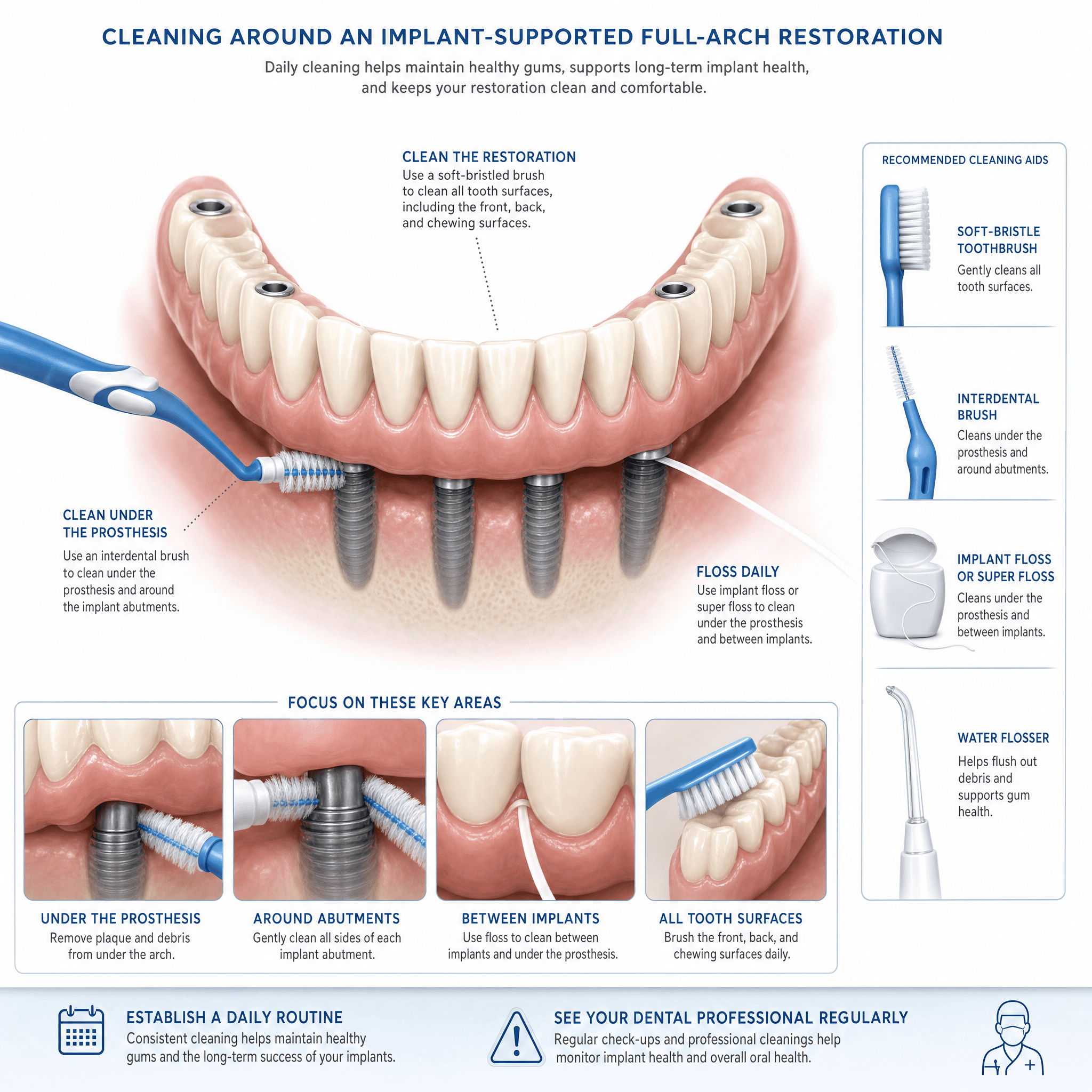
Cleaning can feel unfamiliar around a full-arch bridge. Your dental team should show you where plaque collects and how to reach beneath the replacement teeth. That instruction matters from the beginning, not just at a later maintenance visit.
When to contact the clinic sooner
Call the treating clinic if bleeding doesn’t settle as instructed, swelling or discomfort becomes worse rather than easing, you develop fever or feel unwell, or the bridge feels loose or damaged. Seek urgent medical help for trouble breathing, swallowing or another severe reaction.
Healing time varies, and the appearance of the teeth doesn’t tell you whether the implants have integrated. Keep the planned review appointments even if everything seems fine.
Any surgical or invasive procedure carries risks. Before proceeding, you should seek a second opinion from an appropriately qualified health practitioner if you remain uncertain about the recommendation.
Cost conversations without surprises
A useful cost discussion should explain what is included, what is conditional and what might create another fee. There isn’t a responsible single figure to quote here without knowing the condition of your mouth or the proposed sequence.
Fees may be affected by the assessment and imaging required, treatment of remaining teeth or infection, the surgical plan, temporary and final restorations, laboratory work, anaesthetic arrangements and follow-up care. Bone or gum procedures may also change the plan if they are clinically required. Not every person needs the same steps.
Ask for a written treatment plan you can read away from the chair. At South Perth Dental Surgery, you can use the discussion to pin down the details rather than relying on the headline number.
Useful questions include:
- Which appointments and components are included in this estimate?
- Does it cover both a provisional and later bridge, if both are proposed?
- Which parts could change after surgery, and why?
- Are maintenance visits, cleaning aids or repairs separate?
- What happens financially if an implant doesn’t integrate?
- Is treatment proposed for one arch or both?
- Which costs may be claimable through my health fund, and what should I confirm directly with the fund?
The lowest initial quote may not describe the same treatment as another quote. Compare scope, materials described in the plan, follow-up arrangements and contingencies. Ask for unfamiliar terms to be translated into plain language.
Long-term upkeep belongs in the same conversation. A bridge can need professional cleaning, monitoring, adjustments or repair over time. Home cleaning tools wear out too. Knowing that early lets you consider the whole commitment rather than only the surgical appointment.
If All-on-4 isn’t suitable—or you decide it isn’t right for you—other paths may still address function and appearance. Depending on your teeth and gums, discussion may include keeping and treating selected teeth, a conventional full denture, a partial denture, another implant-supported design or staged care.
Each choice shifts the balance between surgery, removability, cleaning, treatment time, maintenance and cost. A removable appliance may avoid implant surgery but can move or require adaptation. Retaining teeth can be worthwhile when their outlook is reasonable, although those teeth still need ongoing care. There’s no universal answer.
Your implant plan should also sit within ordinary preventive and family care. You can explore the practice’s general dentistry information if other members of your household need care.
For nearby service information, see Dental implants – Kensington. The Invisalign – Kensington page covers a different type of treatment for natural teeth and isn’t an alternative to replacing a full arch, but it may help if you’re browsing options for another dental concern.
Frequently Asked Questions
How long does All-on-4 treatment take?
There isn’t one timeline that applies to everyone. Assessment and planning come first, followed by any treatment needed to control infection or prepare the mouth. Implant placement, healing, bridge stages and reviews then follow the plan set for you. Ask for a written sequence showing what you’ll wear and eat at each stage, not just the date of surgery.
Will I have teeth during healing?
Often a provisional arrangement is considered, but its type and timing vary. The dentist has to assess implant stability, tissues, bite and other clinical factors. Ask what the fallback plan is if the intended provisional bridge can’t be fitted when first expected.
What can I eat afterwards?
You may need softer foods while the surgical sites settle and while the implants are protected from heavy chewing. Your clinician should give instructions based on your procedure. If you’re unsure whether a food is appropriate, think about the force needed to bite and chew it, then check with the clinic.
How do I clean under a fixed full-arch bridge?
Cleaning usually involves reaching along the gumline and beneath the bridge with tools selected for the available space. A dental professional should demonstrate the technique in your mouth, then check it at reviews. If an area bleeds, smells unpleasant or remains difficult to reach, ask for help rather than simply avoiding it.
Can I get All-on-4 if I have gum disease?
Active gum disease needs assessment and management. The dentist will consider inflammation, bone support, cleaning ability and your broader risk factors before recommending implant treatment. An implant bridge doesn’t remove the need to control plaque or attend ongoing reviews.
What are the main alternatives?
Alternatives can include keeping treatable teeth, conventional dentures, implant-supported removable appliances or a different fixed implant design. The realistic choices depend on your mouth and health. Ask the dentist to explain why each option is included or ruled out in your case.
Should I get another opinion?
You can seek another opinion if you’re uncertain about diagnosis, surgery, costs or the proposed removal of teeth. Bring copies of your treatment plan and relevant records if available. A second discussion can be especially useful when options carry very different surgical or maintenance commitments.
A final point before you decide
All-on-4 is a substantial clinical and financial decision. Give yourself room to understand the sequence, risks, alternatives, cleaning requirements and likely ongoing costs. A clear plan should answer what happens if healing or timing differs from the original expectation.
This article provides general information only. Consult a dentist for advice about your own circumstances, suitability, risks and treatment options.
